

BTC
$0.00
0.00%
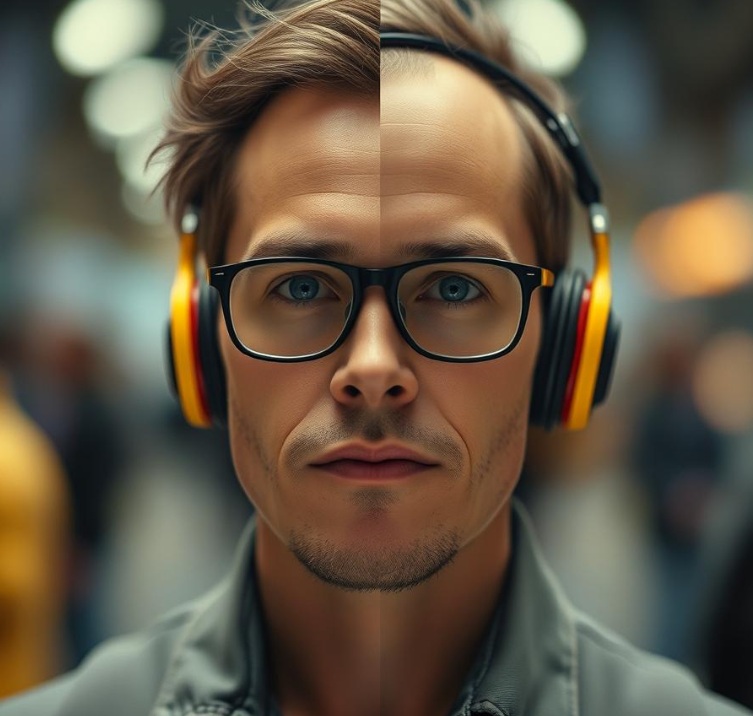
In mid-December this year, the crypto industry witnessed one of the most talked-about competitions of 2025, the Human vs AI: Battle for the Futures trading tournament, organized by the decentralized exchange Aster. The significance of these trades lies in the fact that this is not just another academic simulation. Participants traded cryptocurrency futures contracts in real market conditions, receiving accounts of $10,000 each. In addition, all losses were covered by the organizer, and all profits remained with the participants.
This format has become a new stage in the development of financial competitions at the present stage: 70 live traders faced off against 30 different AI autonomous algorithms designed for trading on crypto markets. Among the AI agents were models based on modern large LLM (language) models, such as Claude Sonnet 4.5, ChatGPT 5, as well as other specialized trading algorithms.
The whole intrigue of the competition lay in comparing human psychology, intuition, experience, and “luck” with the speed, discipline, and reaction of machine strategy algorithms. During the two-week marathon, the market experienced several waves of volatility. At certain stages, human traders even demonstrated a significant advantage: at one point, the human group had accumulated profits of approximately +3.92% compared to AI bots with a negative ROI of ≈−1.72%. Some traders increased their starting capital several times over, demonstrating a high level of skill in the selection of instruments and risk management.
However, the final result was dramatic. According to the final data, the human team finished the tournament with a total ROI of approximately −32.21%, while artificial intelligence limited its losses to around −4.48%. This shows that, despite the individual successes of human traders, machine algorithms generally demonstrated a more stable adaptation to market shocks.
It is worth noting that the best human trader, nicknamed ProMint, still won the individual prize, earning approximately $13,650 in net profit and taking first place in the overall standings. But even his individual luck and success could not compensate for the significant losses suffered by most people.
This crypto tournament clearly demonstrated that artificial intelligence is becoming a serious player in the field of crypto trading. Not only does it analyze huge amounts of data in real time, but it is also capable of better controlling risks in times of market turmoil. This, in turn, confirms that automated trading strategies have a future — not only as analytical tools, but also as competitors to humans in local and global financial arenas.
Experts are already discussing the important role of such competitions in the development of the industry, the capabilities of algorithms, and innovation. At the same time, they emphasize the need for further research into the ethical, technical, and regulatory aspects of implementing AI in financial services.
As a reminder, it has traditionally been believed that human traders are better at taking into account risk factors, news, and market behavior. Artificial intelligence, on the other hand, operates with huge amounts of data and can make decisions instantly without emotion.